The Story
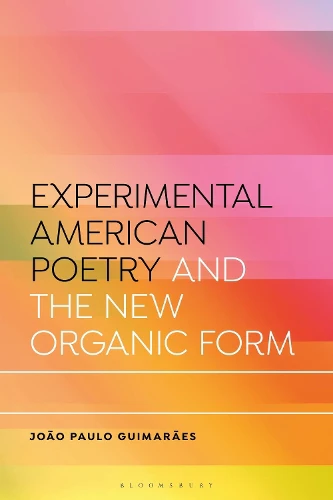
Arguing that the 19th century concept of “living form” (the idea that, like an organism, a poem develops itself from within, according to an internal logic) is not, as some critics have argued, anathema to avant-garde writing, this book contends that the concept survived and flourished in the work of a number of contemporary experimental poets.
Indebted to 19th century science, the notion of a “living form” endured throughout the 20th century and the poetic vanguard’s word games and collages mirrored the disjunctive frameworks that redefined how scientists made sense of life in the age of networks and non-linear systems.
Featuring readings of texts from poets including Ed Dorn, A.M.J. Crawford, P.Inman, Chris Vitiello, and Christian Bök, this book shows how a number of vanguardist poets explores the commonalities they detected between nature’s processes of creation and their own methods of composition. In doing so, it highlights devices like punning, paragrammatic play, metamorphic figuration and memetic repetition, mechanisms these poets find at work in the cybernetic, genetic and digital systems they investigate in their poems.
Description
Arguing that the 19th century concept of “living form” (the idea that, like an organism, a poem develops itself from within, according to an internal logic) is not, as some critics have argued, anathema to avant-garde writing, this book contends that the concept survived and flourished in the work of a number of contemporary experimental poets.
Indebted to 19th century science, the notion of a “living form” endured throughout the 20th century and the poetic vanguard’s word games and collages mirrored the disjunctive frameworks that redefined how scientists made sense of life in the age of networks and non-linear systems.
Featuring readings of texts from poets including Ed Dorn, A.M.J. Crawford, P.Inman, Chris Vitiello, and Christian Bök, this book shows how a number of vanguardist poets explores the commonalities they detected between nature’s processes of creation and their own methods of composition. In doing so, it highlights devices like punning, paragrammatic play, metamorphic figuration and memetic repetition, mechanisms these poets find at work in the cybernetic, genetic and digital systems they investigate in their poems.