Original: $221.83
-70%$221.83
$66.55The Story
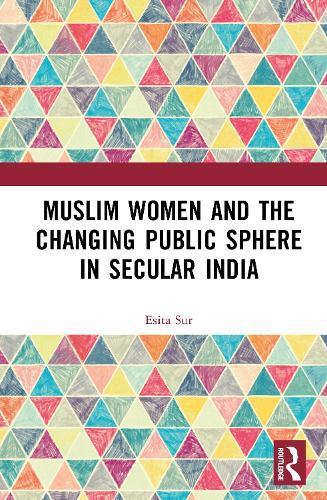
Muslim women have remained sidelined in the post-Partitioned public sphere in India. To overcome the marginality of voice and visibility, they have travelled from the private world to the public sphere; they have crossed several milestones- tin talaq (arbitrary divorce), polygamy, the burqa and Muslim personal law reform. These discursive pillars have recurrently defined and redefined their identity. This book discusses the growing influence of communalisation of Hindu-Muslim relations in India and how it has affected Muslim women’s negotiation and engagement with the public sphere including professional spaces, marketplaces, universities, literary creations, the burqa and public mobilisation.
It addresses ‘the ways’ Muslim women have been negotiating through this changing public sphere in West Bengal and predominantly in Kolkata. The conceptual and methodological frameworks of the book look at lived experiences and subjectivities of Muslim women in these changing spaces and contexts. It focuses on the multiplicities of public spheres, women’s experiences and disruptions in these conceptualisations in the past and the present and delineates Muslim women’s role as counterpublic. It also examines the ‘new’ ways of asserting identity, visibility and rights for Muslim women.
This book will be of interest to students and researchers of political science, sociology, women’s studies, gender studies, cultural studies and South Asian studies.
Description
Muslim women have remained sidelined in the post-Partitioned public sphere in India. To overcome the marginality of voice and visibility, they have travelled from the private world to the public sphere; they have crossed several milestones- tin talaq (arbitrary divorce), polygamy, the burqa and Muslim personal law reform. These discursive pillars have recurrently defined and redefined their identity. This book discusses the growing influence of communalisation of Hindu-Muslim relations in India and how it has affected Muslim women’s negotiation and engagement with the public sphere including professional spaces, marketplaces, universities, literary creations, the burqa and public mobilisation.
It addresses ‘the ways’ Muslim women have been negotiating through this changing public sphere in West Bengal and predominantly in Kolkata. The conceptual and methodological frameworks of the book look at lived experiences and subjectivities of Muslim women in these changing spaces and contexts. It focuses on the multiplicities of public spheres, women’s experiences and disruptions in these conceptualisations in the past and the present and delineates Muslim women’s role as counterpublic. It also examines the ‘new’ ways of asserting identity, visibility and rights for Muslim women.
This book will be of interest to students and researchers of political science, sociology, women’s studies, gender studies, cultural studies and South Asian studies.