Original: $65.78
-70%$65.78
$19.73The Story
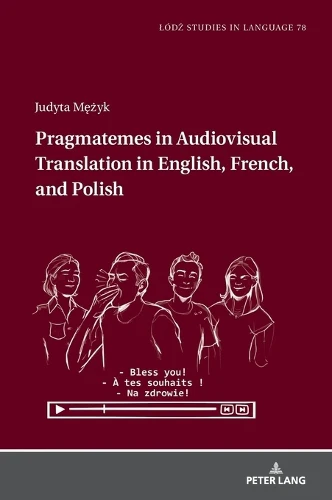
This book examines the linguistic phenomenon of pragmatemes - fixed expressions used predictably in specific communication contexts, such as "Bless you" after someone sneezes or "Cash or credit?" in a retail setting. Though often overlooked, these units are vital to everyday communication, playing a significant role in language fluency. The author investigates pragmatemes from contrastive and translational perspectives, analyzing English, French, and Polish units found in TV series subtitles. The study proposes a universally applicable definition of pragmatemes and explores their structural traits across these three languages through comprehensive linguistic and corpus-based analysis. Additionally, the book introduces a novel context-based approach to translation techniques in subtitling, offering fresh insights into audiovisual translation challenges. With its innovative methodology and rich comparative analysis, this work makes a valuable contribution to linguistics and translation studies.
Description
This book examines the linguistic phenomenon of pragmatemes - fixed expressions used predictably in specific communication contexts, such as "Bless you" after someone sneezes or "Cash or credit?" in a retail setting. Though often overlooked, these units are vital to everyday communication, playing a significant role in language fluency. The author investigates pragmatemes from contrastive and translational perspectives, analyzing English, French, and Polish units found in TV series subtitles. The study proposes a universally applicable definition of pragmatemes and explores their structural traits across these three languages through comprehensive linguistic and corpus-based analysis. Additionally, the book introduces a novel context-based approach to translation techniques in subtitling, offering fresh insights into audiovisual translation challenges. With its innovative methodology and rich comparative analysis, this work makes a valuable contribution to linguistics and translation studies.