$107.32
Violate Man—
$107.32
The Story
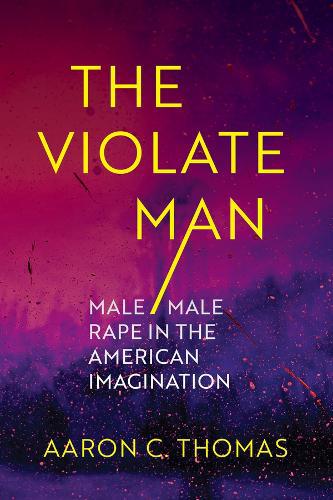
The Violate Man is about the discourse of male/male rape in American culture since the mid‑1960s. Author Aaron C. Thomas analyzes film, television, and theater to indict how treatments of male/male rape narratives have encouraged us to interpret sexual violence over the last sixty years. This discourse is productive for our thinking about the real world. The Violate Man finds that these narratives establish—and often maintain or reinforce—longstanding racialized and sexualized traditions about where male/male rape happens, who commits it, why it is committed, and which of us is vulnerable to its victimization. The most influential of these rape narratives also reinforce a complex series of masculinist assumptions that produce the male body as able‑bodied, whole, and impenetrable, disallowing bodies broken by violence, sexual and otherwise, from the very category of male.
From the punchline of bro comedies to the vengeance arc of prison dramas, Thomas argues that male/male rape narratives are used by writers, filmmakers, and comedians to make sense of the changing landscape of American masculinity, and that these narratives have shifted widely since the 1960s, reflecting masculinity’s varying anxieties and concerns.
From the punchline of bro comedies to the vengeance arc of prison dramas, Thomas argues that male/male rape narratives are used by writers, filmmakers, and comedians to make sense of the changing landscape of American masculinity, and that these narratives have shifted widely since the 1960s, reflecting masculinity’s varying anxieties and concerns.
Description
The Violate Man is about the discourse of male/male rape in American culture since the mid‑1960s. Author Aaron C. Thomas analyzes film, television, and theater to indict how treatments of male/male rape narratives have encouraged us to interpret sexual violence over the last sixty years. This discourse is productive for our thinking about the real world. The Violate Man finds that these narratives establish—and often maintain or reinforce—longstanding racialized and sexualized traditions about where male/male rape happens, who commits it, why it is committed, and which of us is vulnerable to its victimization. The most influential of these rape narratives also reinforce a complex series of masculinist assumptions that produce the male body as able‑bodied, whole, and impenetrable, disallowing bodies broken by violence, sexual and otherwise, from the very category of male.
From the punchline of bro comedies to the vengeance arc of prison dramas, Thomas argues that male/male rape narratives are used by writers, filmmakers, and comedians to make sense of the changing landscape of American masculinity, and that these narratives have shifted widely since the 1960s, reflecting masculinity’s varying anxieties and concerns.
From the punchline of bro comedies to the vengeance arc of prison dramas, Thomas argues that male/male rape narratives are used by writers, filmmakers, and comedians to make sense of the changing landscape of American masculinity, and that these narratives have shifted widely since the 1960s, reflecting masculinity’s varying anxieties and concerns.